One Day Safari at Queen Elizabeth National Park: The western Uganda location between Lake Edward and Lake George makes Queen Elizabeth National Park a leading Uganda safari destination due to its stunning landscapes and abundant wildlife population. The UNESCO Biosphere Reserve stands as East Africa’s most biodiverse park, which enables visitors to encounter multiple species of wildlife within 24 hours. The wildlife encounters at Queen Elizabeth National Park become permanent memories during any combination of game drives and boat cruises, and guided nature walks.
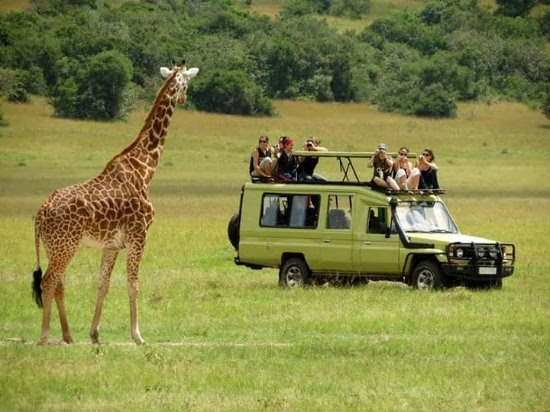
The first experience of your day should be a game drive that begins at sunrise
The first experience of your journey should be an early morning game drive. The Kasenyi Plains awaken with the dawn of the sun in the savannah. The Uganda kobs thrive in this part of the park while forming herds to graze on the golden plains. The kob herds attract numerous lions which enables visitors to see predators with reasonable ease. Queen Elizabeth Park maintains more than ninety lion members including the uncommon tree-climbing species that populate the Ishasha sector south of the park.
Leopards are found throughout the northern sector yet they prefer to stay near Mweya. The opportunity to view wildlife becomes more likely during the early hours of the day. Hyenas make their way back to their dens after hunting activities during the night’s colder part.
The crater lakes provide perfect opportunities to view elephants along with buffalo during mid-morning hours.
The warming day requires driving to the Katwe Crater area or exploring the Mweya Peninsula region. Here, herds of African elephants stroll across the plains or browse near acacia trees. Queen Elizabeth National Park contains a significant number of elephants among the highest in Uganda so visitors can commonly spot these animals gathering near water points and wooded areas.
You can regularly observe Cape buffaloes as they either bathe in the mud pools or feed from distant grazing areas. Large groups of these massive animals roam the area together with warthogs and waterbucks, and bushbucks, which you will definitely encounter during your journey.
The area provides exceptional rewards for those interested in birds. Queen Elizabeth Park ranks as a top birdwatching site in East Africa because it hosts more than 600 bird species. You should watch for the noble African fish eagle together with the bright saddle-billed stork and the large groups of crowned cranes.
Noon: Cruise Along the Kazinga Channel
Boat cruising on the Kazinga Channel stands as the signature experience during any Queen Elizabeth National Park tour through Uganda. During the dry season, enormous animal numbers converge at the 32-kilometer Kazinga Channel, which links Lake Edward with Lake George.
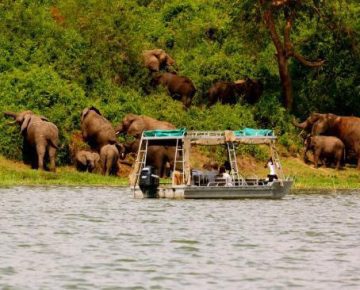
Kazinga Channel Boat cruise
The water channel belongs to hippos, who can be observed swimming within the water or sitting on the shoreline. Queen Elizabeth Park maintains the largest population of hippos that exist in Africa. Observations of Nile crocodiles patrolling the waters are common, while they frequently use bank areas to sun themselves.
Passengers on this cruise have excellent opportunities to witness elephants when they drink alongside them or when they bathe and play near the water. The area features buffalo together with monitor lizards and hundreds of waterbirds. Keep a close eye for pelicans as well as kingfishers and African skimmers, together with the chance to spot the rare shoebill stork if you have luck on your side.
The afternoon brings travelers to Ishasha Sector for an opportunity to observe tree-climbing lions.
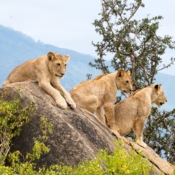
The Ishasha sector, located in the southern part of Queen Elizabeth National Park, stands as one of Africa’s only two regions where lions routinely practice tree-climbing. Scientists have not determined the cause of tree climbing in lions but they think the practice enables them to avoid heat and insects or enhances their hunting abilities.
The trees below the fig trees offer an opportunity to see lions relaxing on branches. The savannah of Ishasha welcomes both topis and Uganda kobs in substantial groups, which attract predators to hunt in the open fields. The unique safari experiences in Uganda become most prominent in this territory so keep your camera prepared.
Evening: Baboons, Monkeys, and Night Creatures
The twilight hours bring increasing visibility of primates in the area. Olive baboons, together with vervet monkeys, frequently appear near the forest edges and roadsides in the park. Black-and-white colobus monkeys as well as red-tailed monkeys, along with several other primate species, inhabit the Maramagambo Forest area of the park.
The nighttime drive allows visitors to spot genets as well as civets, together with bush babies, and occasionally, lucky travelers can witness leopard sightings. The park’s nighttime creates its own unique tempo, which allows visitors to view Uganda’s wildlife through a fresh perspective.
Conclusion on One Day Safari at Queen Elizabeth National Park
Queen Elizabeth National Park stands as the central destination in any Uganda tour because visitors can experience its importance throughout a single day of exploring. Travelers can experience an enjoyable wildlife encounter within Queen Elizabeth National Park despite their brief stay since it presents an extensive range of animals from major mammals to uncommon predators, together with colorful birds and interesting primates. Second-time visitors and new safari enthusiasts will find this place equally astounding for its diverse species and population density during a single day of exploration.
Planners of Uganda safaris must include Queen Elizabeth National Park in their itinerary. A single day allows visitors to develop a passionate bond with the untamed parts of the Pearl of Africa.